

Are Streetwear Brands for Conscious Creators Worth It in 2026?
Last Updated: November 4, 2026
Quick Summary
Streetwear brands for conscious creators are worth it in 2026 when every graphic carries a message you have chosen, because repeated wear reinforces identity and values daily. Destined 4 Greatness pairs intentional apparel with books by Lene Fepuleai so the outer signal matches the inner work.
- The global streetwear market is projected to reach AUD 616.85 billion in 2026.
- Audit your wardrobe by naming three core values and scoring each piece from 1 to 5.
- Replace gaps with one intentional purchase and wear it for a month before adding more.
- Deliberate uniforming means repeating a small set of pieces whose message you chose.
- The Gold Eagle Graphic Pullover is priced at $100.00 AUD.
Table of Contents
- Why Streetwear Brands for Conscious Creators Matter in 2026
- How Clothing Choices Reflect Cultural Narratives and Personal Values
- The Psychology of Streetwear Symbolism: Self-Expression and Identity
- Apparel That Supports Personal Growth: A Practical Audit Framework
- Books for Spiritual Transformation and Healing: The Missing Piece in Your Wardrobe
- How Destined 4 Greatness Builds Intentional Streetwear for Conscious Creators
- The Psychological Impact of Uniforming: When Your Wardrobe Becomes a Daily Affirmation
- Start Your Intentional Wardrobe with Destined 4 Greatness
- Frequently Asked Questions
Why Streetwear Brands for Conscious Creators Matter in 2026
The global streetwear market is projected to reach AUD 616.85 billion in 2026, according to Fortune Business Insights' streetwear market analysis, yet only a fraction of that spend goes to labels asking what a garment actually stands for. That gap is the whole argument for streetwear brands for conscious creators in 2026. This guide from Destined 4 Greatness examines whether intentional apparel earns its place in a growth-focused life, and how to tell the difference between a slogan and a philosophy.
Conscious creators treat clothing as visual communication, not decoration. The psychology is straightforward: what a person wears repeatedly becomes part of how they see themselves. A wardrobe built on core values reinforces those values daily.
The McKinsey State of Fashion 2026 report notes rising pressure on fashion brands for supply chain transparency and environmental disclosure. Buyers now ask harder questions.
For a deeper case, read why intentional fashion matters for growth.
How Clothing Choices Reflect Cultural Narratives and Personal Values
Clothing is a form of non-verbal communication that carries cultural narratives and personal values before a word is spoken. A person's style evolution usually traces their identity work: what they rejected, what they inherited, what they chose. The mechanism is simple, repeated exposure to a symbol, worn on the body, gradually shifts how the wearer categorises themselves. Psychologists call this enclothed cognition: the garments you wear prime the behaviours you associate with them.
Cultural roots shape aesthetic preferences more than most buyers admit. Subculture influences, from skate to music scenes, supply symbolism that gets absorbed into mainstream wardrobes. In Australia, the surf-and-skate lineage of coastal streetwear carries a specific narrative of resilience and outdoor identity that differs from the urban narratives of northern-hemisphere scenes. The result is curated style that signals belonging, or signals a deliberate break from it.
Conscious consumerism adds a second layer. Choosing apparel that supports personal growth means asking whether a piece reflects core values or simply follows a trend cycle. Individualism in dress is a decision, not an accident. The trap is inherited symbolism: wearing a graphic because it reads as 'edgy' or 'authentic' without knowing what narrative it actually carries. A symbol borrowed from a subculture you have no relationship with is costume, not communication.
A useful test is the narrative trace. For any piece you own, ask three questions: where did this symbol originate, what does it claim about the wearer, and would I defend that claim in conversation? If the answers are vague, the garment is carrying someone else's narrative rather than your own. This is where the inner work of Perspectives of the Analytical Mind becomes practical, Lene Fepuleai's reflections on how culture, education and authority shape identity give readers a framework for spotting inherited beliefs, including the ones stitched into their clothing.
The deeper point is that values are not abstract. They show up in what you repeatedly put on your body. A wardrobe built on conscious choice becomes a daily reinforcement of the narrative you have actually chosen, rather than one you absorbed by default.
The Psychology of Streetwear Symbolism: Self-Expression and Identity
Streetwear symbolism works because it compresses meaning into a graphic. A single emblem can carry self-expression, identity and a fashion philosophy without a caption. Fashion psychology calls this social signalling: the wearer tells a community who they are, quietly. But the mechanism runs deeper than signalling to others, it also signals to the self, and that inward signal is where conscious creators have the most to gain.
Personality traits show up in how boldly someone dresses. Some build a wardrobe around statement pieces; others use wardrobe staples as a neutral base and let one symbol do the talking. Both are legitimate forms of creative authenticity. The variable that matters is not volume but consistency: a symbol worn once is decoration, a symbol worn weekly becomes part of the wearer's self-concept.
Brand ethos matters here. A label that treats graphics as decoration produces noise. A label that treats them as affirmation produces a daily reminder. The difference is narrative-driven design, whether the emblem was chosen to mean something specific, or borrowed to look like it does.
There is a tension worth naming, and most competitors skip it: the pull of uniforming. Streetwear has its own conformity pressure, the same silhouettes, the same drops, the same logo logic. A conscious creator can end up uniformed by trend rather than by choice. The distinction is intent. Deliberate uniforming means selecting a small set of pieces whose message you have actually chosen, and repeating them so the message compounds. Trend-driven uniforming means repeating whatever the scene is currently wearing, which automates a mismatch between stated values and daily signal.
The practical resolution is to treat symbolism as a contract with yourself. Choose one emblem that states something true about the person you are becoming, wear it repeatedly, and let the repetition do the psychological work. This is the same principle How to Tap Into Your Divinity applies to inner work: small, repeated, conscious choices reshape identity more reliably than occasional grand gestures. Clothing sets the daily tone; the book does the deeper reconstruction.
Apparel That Supports Personal Growth: A Practical Audit Framework
Apparel that supports personal growth is clothing chosen against stated values rather than impulse, and it can be audited in four steps. Run this before buying anything new.
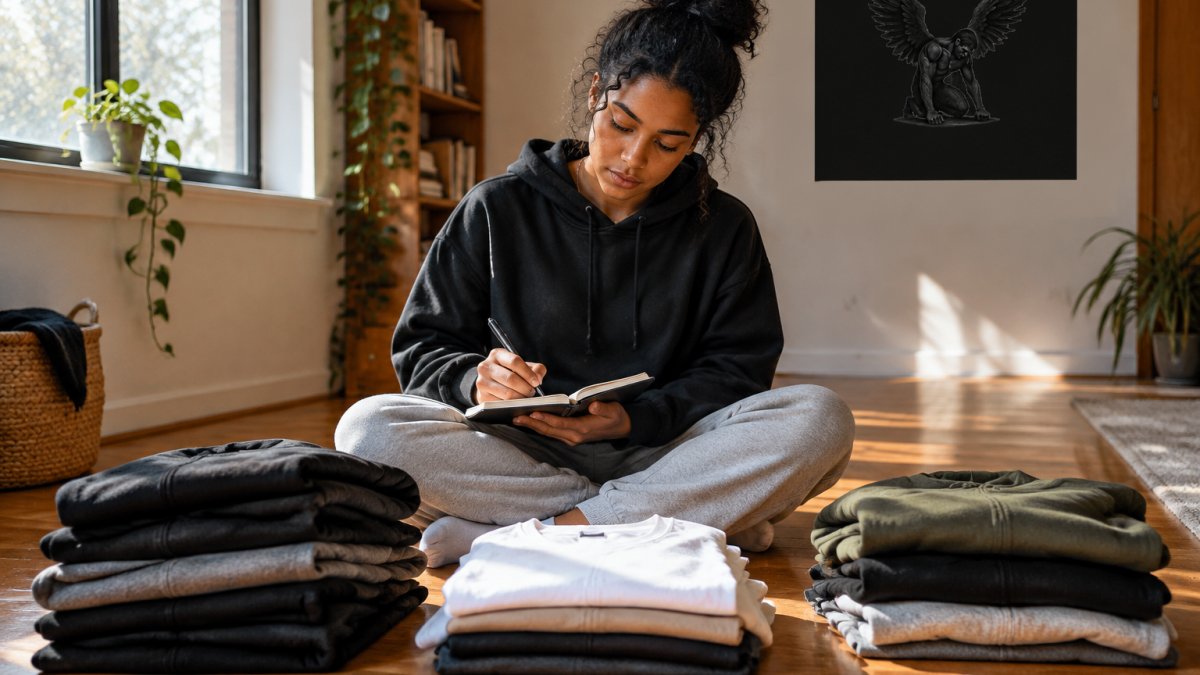
- Name three core values. Write them down. If "discipline" is one, a garment that reinforces it has a job.
- Score each existing piece 1-5. Does it match a value, fit well, and get worn weekly? Anything scoring 2 or below leaves.
- Check the message. Read the graphic. Would you be comfortable explaining it to someone you respect?
- Buy one piece, not five. Replace the gap with a single intentional purchase and wear it for a month before adding more.
Watch out: the common mistake is auditing for aesthetics instead of values, which rebuilds the same wardrobe with new labels.
Destined 4 Greatness Eagle Graphic Tee — Oversized Men’s Streetwear T‑Shirt →
Books for Spiritual Transformation and Healing: The Missing Piece in Your Wardrobe
Books for spiritual transformation and healing do the inner work that apparel can only reinforce. A hoodie can remind someone of their purpose; it cannot dismantle the limiting beliefs underneath it. That is why Destined 4 Greatness pairs its streetwear with written works by Lene Fepuleai.
How to Tap Into Your Divinity is the practical entry point, covering shadow work, emotional conditioning, self-discipline and personal accountability. Sacred Scars explores adversity, survival and spiritual discernment, showing how painful experience becomes a pathway to wisdom. Perspectives of the Analytical Mind questions inherited beliefs and societal programming, building critical thinking and personal sovereignty.
The pairing is deliberate. Clothing sets the daily tone; reading does the deeper reconstruction. Start with How To Tap Into Your Divinity if the inner work is new.

How Destined 4 Greatness Builds Intentional Streetwear for Conscious Creators
Intentional streetwear is apparel designed so that every graphic carries a message the wearer has chosen. Destined 4 Greatness builds on that premise, treating clothing as motivation, affirmation, identity and purpose rather than trend output.
The range stays tight and deliberate. The Gold Eagle Graphic Pullover ($100.00 AUD) carries a vintage-inspired winged emblem in warm gold on a white hoodie, a badge of intent rather than a logo. The Eagle Graphic Tee in oversized white ($75.00 AUD) features a gold chest emblem and a relaxed, oversized fit. The Vintage Angel Wing Logo Tee ($75.00 AUD) has a garment-dyed, lived-in finish for understated attitude.
Customers notice the difference. Jason M. put it plainly: the shirt "doesn't just look good, it inspires good."
For the wider mission, read about the brand.
The range stays tight and deliberate, with each piece priced and positioned as a badge of intent.
| Piece | Price (AUD) | Key detail |
|---|---|---|
| Gold Eagle Graphic Pullover | $100.00 | Vintage-inspired winged emblem in warm gold on white hoodie |
| Eagle Graphic Tee in oversized white | $75.00 | Gold chest emblem and relaxed, oversized fit |
| Vintage Angel Wing Logo Tee | $75.00 | Garment-dyed, lived-in finish for understated attitude |
The Psychological Impact of Uniforming: When Your Wardrobe Becomes a Daily Affirmation
Uniforming is the practice of deliberately repeating a small set of outfits so that getting dressed stops consuming decision energy. The psychological impact is real: fewer choices in the morning leave more attention for creative work.
For conscious creators, uniforming turns a wardrobe into a daily affirmation. Reaching for the same intentional piece each morning repeats the same message to the self. Over months, that repetition shapes self-identity more than any occasional motivational quote.
There is a limit worth naming. Uniforming only works when the chosen pieces genuinely reflect values; otherwise it simply automates a mismatch.
Start Your Intentional Wardrobe with Destined 4 Greatness
Building an intentional wardrobe starts with one decision: stop buying what looks good and start buying what says something true. The books and the apparel are designed to work as one system, inner work and outer signal reinforcing each other.
Browse the men's clothing collection for oversized tees and eagle hoodies, or explore the women's collection to begin with a single piece. Read one book alongside it.
The challenge is not finding more clothes; it is choosing fewer, better ones that carry meaning. Destined 4 Greatness combines resilient streetwear with soul-shifting literature so the outer signal matches the inner work. The range includes motivational hoodies, oversized graphic tees and three books by Lene Fepuleai covering spiritual awakening, practical inner healing and independent thinking. Get started with Destined 4 Greatness and build a wardrobe that strengthens your mindset every time you get dressed.
Frequently Asked Questions
What defines conscious streetwear for personal growth?
Conscious streetwear for personal growth is clothing chosen with intention rather than impulse. It combines three elements: a clear message or symbol that aligns with your values, durable construction that respects your investment, and a brand ethos that supports your inner work. Conscious creators are increasingly seeking pieces that do more than follow trends. Look for garments where the design carries personal meaning and the quality holds up through repeated wear.
How does intentional clothing support spiritual transformation?
Intentional clothing acts as a daily anchor for the inner work you are already doing. When you wear a piece that carries a message of resilience or purpose, it reinforces those qualities each time you put it on. This is the principle behind apparel that supports personal growth: the garment becomes a reminder, not just a covering. Pairing this with books for spiritual transformation and healing, such as Sacred Scars or How to Tap Into Your Divinity, creates a consistent environment where your values are visible and reinforced.
How can streetwear serve as a tool for self-affirmation?
Streetwear becomes a self-affirmation tool when the symbolism on the garment matches the identity you are building. A graphic that represents overcoming adversity or committing to growth functions as a visual cue you wear into the world. Destined 4 Greatness designs its pieces around this principle, with emblems and wordmarks that carry motivational weight. The key is choosing pieces where the message genuinely reflects your current chapter, not just an aesthetic you admire from a distance.
How do I build a wardrobe that reflects my commitment to healing and resilience?
Start with an audit. Lay out what you already own and ask three questions: Does this piece carry meaning for me? Is it built to last? Does it align with the person I am becoming? Remove anything that fails all three. Then invest slowly in pieces that pass. A heavyweight tee or hoodie from a purpose-driven brand, combined with reading that challenges and supports you, creates a wardrobe that works as a system for growth rather than a collection of random items.
